

Kate Cousens
Business Transformation Executive
Understanding the role of an executive coach
Since 2019, I have been an executive coach, guiding managers, leaders, and entrepreneurs through the diverse challenges of running an organisation. I admit that when I started out as an executive coach, I initially thought my role was to tell people what to do and that I needed to have all the answers to their questions. As you can imagine, this felt quite overwhelming at times!
I soon realised that whilst, naturally, the people I worked with were interested in my previous experience and sometimes wanted advice, my role as a coach wasn’t about giving them answers – it was about holding space for them to explore their own thinking. This is a regular misconception about what executive coaching is.
Coaching vs mentoring and consulting
A coach is there to facilitate some kind of improvement or action towards goals and ambitions. Different to a mentor or a consultant, who you’d hire for their expertise and advice, an executive coach helps an individual (the coachee) to look within themself for the answers.
I recently became an Associate Certified Coach by the International Coaching Federation (ICF). To achieve this accreditation, I had to complete 60 hours of coach-specific training, which I completed with Barefoot Coaching, 10 hours of mentor coaching, clock-up 100 hours of coaching experience, and pass the ICF credentialing exam. Interestingly, anyone can call themselves a coach – like I did for several years – you don’t have to put yourself through all the training I did, and indeed I work with many fellow coaches at Sharing in Growth who haven’t, and they are still brilliant coaches.
I decided to complete the training to boost my coaching skills and really learn how to coach, not advise. Looking back, I can see that I was often blurring the lines between being a coach and a mentor before I undertook the training.
So, what does an executive coach do?
The word ‘coaching’ originates from the Hungarian word for carriage, which is a fitting metaphor for the concept of coaching helping you move from one place to another. Coaches believe that the mind holding the problem also holds the solution – usually the best one. The role of a business coach is to facilitate self-discovery and empower the coachee to find their own solutions. As a coach, I have many different tools, techniques and frameworks that I draw upon to tailor my approach to the unique needs of the individual.
In an organisational context, I can partner with clients to help them improve their business performance or focus on areas of personal development, such as improving their confidence or communication skills. The key component of coaching is the contracting that takes place between the coach and the coachee.

The importance of contracting in coaching
Contracting in coaching is the process of establishing an agreement between the coach and the coachee to outline the terms, expectations and boundaries of the coaching relationship. It can be formal or informal, but it is a foundational step which helps to ensure both parties are clear about their roles, responsibilities, and what they aim to achieve during the coaching relationship. It is about aligning expectations from the start.
For instance, as an ICF accredited coach, I am bound by a code of ethics, and it is important for the coachee to know what information will remain confidential within the coaching relationship. This is particularly important where an organisation is involved, as it is not uncommon for individuals to be put forward for coaching by their line manager. Establishing trust and enabling open communication is vital to the success of the coaching relationship.
One of the things we are taught as coaches is to ‘always be contracting’, because the dynamics of a coaching relationship are such that things can often shift and change along the way. For instance, a coachee might start out with one goal in mind, but then something changes for them and there is another priority which they need help working through. I know that things can and often do change in organisations, so being able to adapt to those changes in an agile way is critical to the success of the coaching relationship.
That said, a significant element of coaching is accountability, and if a coachee is continually changing their mind or their goals, it is the role of the coach to hold up a mirror to those behaviours.
The importance of contracting in coaching
Contracting in coaching is the process of establishing an agreement between the coach and the coachee to outline the terms, expectations and boundaries of the coaching relationship. It can be formal or informal, but it is a foundational step which helps to ensure both parties are clear about their roles, responsibilities, and what they aim to achieve during the coaching relationship. It is about aligning expectations from the start.
For instance, as an ICF accredited coach, I am bound by a code of ethics, and it is important for the coachee to know what information will remain confidential within the coaching relationship. This is particularly important where an organisation is involved, as it is not uncommon for individuals to be put forward for coaching by their line manager. Establishing trust and enabling open communication is vital to the success of the coaching relationship.
One of the things we are taught as coaches is to ‘always be contracting’, because the dynamics of a coaching relationship are such that things can often shift and change along the way. For instance, a coachee might start out with one goal in mind, but then something changes for them and there is another priority which they need help working through. I know that things can and often do change in organisations, so being able to adapt to those changes in an agile way is critical to the success of the coaching relationship.
That said, a significant element of coaching is accountability, and if a coachee is continually changing their mind or their goals, it is the role of the coach to hold up a mirror to those behaviours.
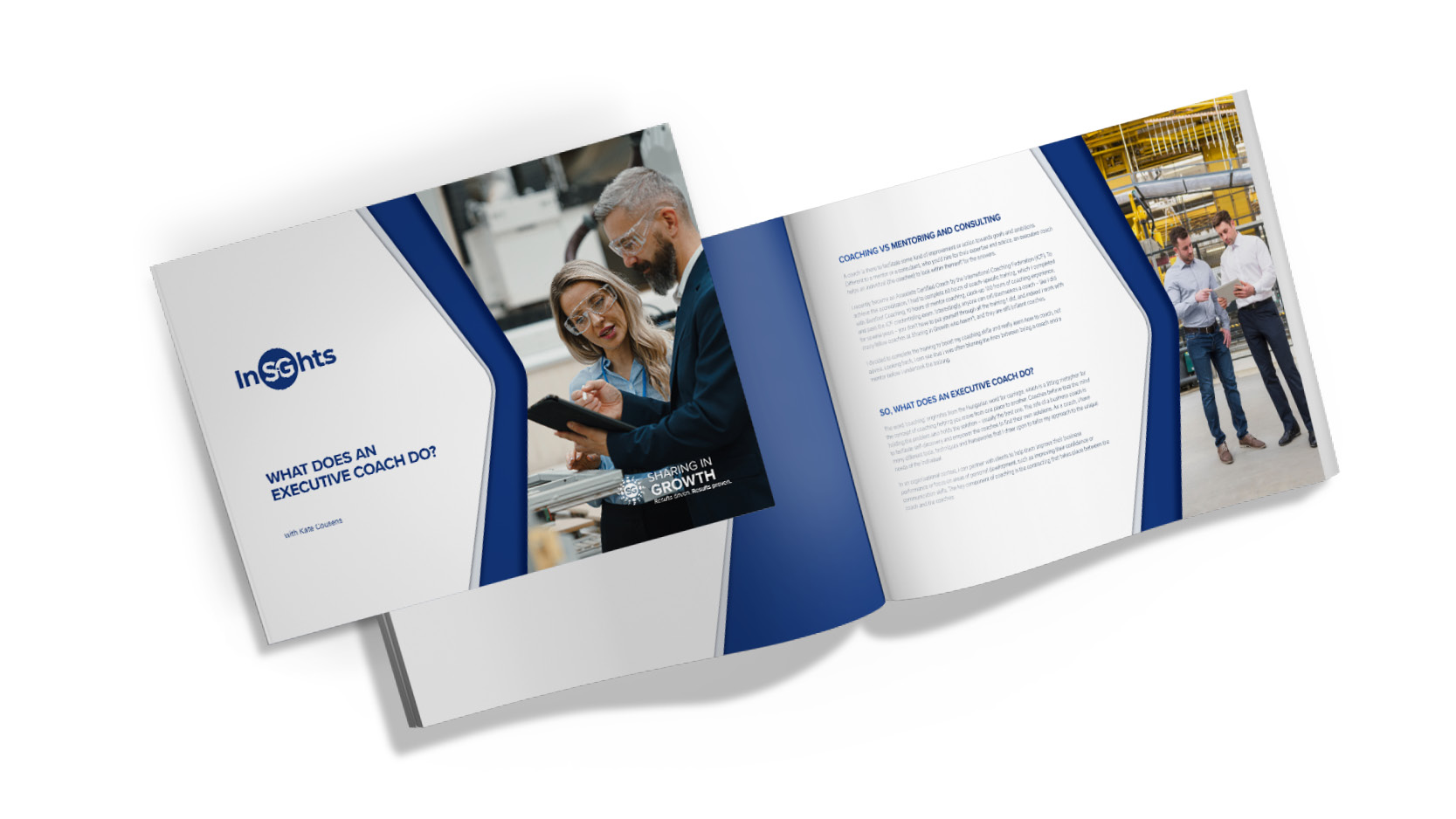
The power of challenge in coaching
Coaching can be uncomfortable – if someone wants a cosy chat over a coffee with someone who will listen to their issues without challenge, I advise them to find a friend to talk to, not a coach!
I often call myself ‘the grit in the oyster’, another metaphor (I forgot to mention, coaches love metaphors!) to describe how a small irritation or challenge can lead to something valuable, like the grain of sand inside an oyster leads to the formation of a pearl. In coaching, challenge can spark transformation and create value. This doesn’t mean challenging for challenge’s sake; it is the ability to be able to reflect to an individual what the coach sees and hears.
To be a coach requires deep observation and listening skills. Now, if you know me in my everyday life, you might not initially say I demonstrate these skills because I am naturally quite high energy and fast-paced. However, I’d like to think that if you asked any of the people I have coached, their experience of me was quite different. This is because coaching is conducted within a ‘container’ – if we were to meet and have a conversation, that is not coaching.
To have a coaching conversation, we need to have established the contract as I explained above – we would need to be clear on the expectations of each other and know that what is explored within the coaching conversation sits outside of any other relationship we may have.
With this in mind, it is not ethical to coach friends or family members because we are often too close to them to be able to provide that degree of challenge and distance from situations. Quite often, people come to coaching because they have a problem they are facing, and if we know that individual on a personal level, chances are that we will hold an opinion on it which would get in the way of our ability to coach them through it.
It is my role as a coach to have unconditional positive regard for the coachee I am working with – which means I suspend all judgment of what I may think is morally right or wrong, or whether their behaviour challenges my personal beliefs and values. Of course, this can be problematic for some coaches and we ourselves are encouraged to have mentor coaching or supervision from other, more experienced coaches to address any challenges we may encounter.

Why do people use executive coaches?
In my experience, people come to coaching for different reasons, but some of the common ones are to gain clarity and act on a goal, to address some self-limiting behaviours and emotions, and to improve their performance in some way.
The key responsibilities of a business coach are to assist in defining clear, measurable and achievable goals. This often requires breaking down a big goal like business growth into baby-steps and micro-actions that can help them move closer towards it.
Once the goals have been set, the main role of the coach is to hold the coachee accountable for their actions and commitments. Regular check-ins with the coachee are critical to the success, and therefore the coachee must be prepared to commit to making the time for the coaching sessions.
One of the things I have experienced on too many occasions to mention is that a coachee has a great coaching session, is energised and motivated towards achieving their goals… but then cancels their next coaching session. Then they will rearrange the next, and when we finally meet, they have a myriad of excuses as to why they haven’t taken any steps towards achieving their goal. Usually, the main reason is that they have been ‘too busy’.
Coaching won’t work without that ongoing commitment from the coachee, so only seek out a coach when you are ready, willing, and able to make that commitment to yourself. And it is a commitment to yourself.
Coaching is only beneficial for the coachee – if we are doing our job as coaches correctly, we will be ‘holding it lightly’ when it comes to having any kind of attachment to the coachee’s goal. This can be challenging as a business coach because we often look to measure our own success against that of the coachee’s and clients we work with – but if we are being strict with ourselves, that is their success and not ours. Many of us come to coaching from having a deep yearning to help others, so this is something we often have to manage in ourselves!
The role of association and disassociation in personal growth
Other things people turn to business coaching for are to provide support in developing skills that will help their career progression, for instance leadership, strategic planning, communication, and public speaking. When we are working with these issues, it can be helpful to use the concepts of association and disassociation to help individuals mentally connect with their experiences.
Association involves being fully immersed in the experience. When a person is associated, they are focused on their internal sensations, emotions, and thoughts; they are ‘in the moment’ experiencing everything directly. Using techniques such as mindfulness and visualisation can help the coachee to get into an associated positive state, such as remembering a time when something went well to build the muscle-memory of those feelings.
On the other hand, disassociation involves stepping back from the experience, creating a mental distance. A disassociated person views their performance more objectively, almost like an outsider which can help them manage negative emotions during challenging situations. It is a useful tool for helping a coachee to detach from any stressors and look objectively at the issue.
Coaching for leadership and performance
A business coach can also help clients navigate challenges by encouraging critical thinking and providing frameworks for problem-solving. This involves being curious and asking incisive questions to help the coachee work through to a solution.
For those in leadership positions, a business coach can facilitate the development of essential leadership skills. This includes effective communication, emotional intelligence, and team management, which are vital for fostering a positive work environment.
For instance, if a manager is facing challenges with team productivity and morale, they may come to coaching feeling overwhelmed and unsure about how to address these issues effectively. In this scenario, the coach would be asking open-ended questions to identify specific challenges and the root causes of low productivity and morale.
Typical questions might include:
- “What specific behaviours have you observed that indicate low morale?”
- “How do these behaviours impact team performance?”
- “What feedback have you received from team members about their work environment?”
Then we might call upon one of the many problem-solving frameworks we use to help them work through these challenges, such as the SWOT Analysis (Strengths, Weaknesses, Opportunities, Threats), to help the manager systematically evaluate their team dynamics.
After completing the SWOT Analysis, the coach would work through the insights gained to help the manager develop an action plan. Through stepping back from the emotion, they may be feeling about the situation and being able to focus on clear action steps, the manager will be developing their own critical thinking. In turn, as they implement the actions, they may gain more confidence in their own ability to address challenges.
At the next coaching session, the focus of the coach would be to encourage the manager to reflect on what worked, what didn’t, and how they can adapt their approach moving forward. This structured guidance of the coach is an empowering process which should help that individual navigate future challenges independently.
Overcoming self-limiting beliefs
Many individuals struggle with self-doubt or limiting beliefs that hinder their progress. A business coach helps clients recognise these beliefs and develop strategies to overcome them, fostering a growth mindset.
I am sure you can see the difference now between a coaching approach and that of advising/mentoring/consulting. Coaching is about empowering the individual to find the answers within themselves, rather than telling them what to do. Many people find coaching a powerful tool for this reason. Business owners and senior leaders can find their roles isolating, and as coaches, we offer a safe space for clients to express their fears and frustrations, while also celebrating their successes.
In the fast-paced world of business, it’s easy to lose sight of goals amidst daily operations. A business coach helps clients clarify their vision and maintain focus. By regularly revisiting objectives, clients can ensure they are aligned with their overarching mission. An executive coach tailors their approach to the specific needs of the client; this personalised guidance can lead to more effective strategies and solutions.
By instilling effective practices and strategies, clients can build a sustainable business model that withstands challenges over time.
Choosing an executive coach
Choosing the right executive coach is a critical decision that can significantly impact your professional growth and success. When selecting a coach, there are several important factors to consider.
First, consider what credentials and experience are important to you. You may want to consider colleagues of mine from the International Coaching Federation (ICF), as this demonstrates their commitment to professional standards.
Additionally, if you’re facing specific challenges – such as scaling your business or improving team dynamics – it can be beneficial to choose a coach with industry experience in those areas. For example, a coach who has successfully navigated startup growth may be particularly valuable to an entrepreneur looking to expand their business.
Next, consider the coaching style of potential coaches. Each coach has a unique approach – some may adopt a more directive style, providing clear guidance and actionable steps, while others may emphasise self-discovery, encouraging clients to explore their own solutions. It is essential to find a coach whose style resonates with you and aligns with how you prefer to learn and grow.
For instance, if you thrive in collaborative environments, a coach who facilitates discussions and encourages exploration might be the best fit. Most coaches offer a free discovery call or meeting, so that you can get to know them and see if there is a good fit for what you are looking for.
Also, don’t hesitate to ask for references and testimonials from previous clients. This can provide valuable insight into the coach’s effectiveness and the type of results they have achieved. A coach with positive feedback from clients who have faced similar challenges can give you confidence in their abilities. For example, if a previous client mentions how the coach helped them increase their revenue by 30% through strategic planning, that’s a compelling reason to consider working with them.
The compatibility between you and your coach is also crucial, as a successful coaching relationship is built on trust and rapport. Make sure you feel comfortable with the coach and can communicate openly about your goals and challenges. This connection can greatly enhance the coaching experience, allowing for more honest dialogue and deeper insights.
Lastly, reflect on the focus areas that are most important to you. Different coaches specialise in various domains, such as leadership development, business strategy or personal growth. By selecting a coach whose expertise aligns with your specific goals, you increase the likelihood of achieving meaningful progress. For instance, if you’re looking to enhance your leadership skills, a coach who specialises in that area will be better equipped to guide you effectively. Taking the time to consider these factors will help you make an informed decision and find a coach who can truly support your journey.
Conclusion
Business landscapes are constantly evolving, so the value of having a business coach cannot be overstated. They provide the guidance, support, and accountability needed to navigate challenges, develop skills, and achieve both personal and professional goals. Whether you are an established leader or an aspiring entrepreneur, working with a business coach can unlock new opportunities and drive you toward sustained success.
If you are contemplating whether to engage an executive coach, consider your goals and the potential benefits of this partnership. With the right coach by your side, you can enhance your performance, improve your decision-making, and ultimately achieve the success you desire.
Any further questions?
If you have any enquiries regarding the content discussed in this article or how Sharing in Growth can benefit you, feel free to reach out to our team by clicking here. To explore more about Sharing in Growth’s offerings, click here, and you can also connect with us on LinkedIn by clicking here.